
Shallow and Raft Foundations
- Isolated and pad footings
- Strip and wall footings
- Combined and strap footings
- Raft and mat foundations
- Cellular, compensated and piled-raft systems where applicable
- Ring and annular foundations for tanks, silos, stacks and towers
- Grillage and heavy-equipment support foundations
- Static-equipment and machine foundations
Analysis may include bearing capacity, contact pressure, eccentricity, sliding, overturning, uplift, settlement, differential settlement, punching shear, one-way shear, flexure, crack control, anchorage, pedestal and base-plate load transfer, and soil-spring or continuum interaction.
Deep Foundations
- Driven precast, cast-in-place and steel piles
- Bored cast-in-place piles and drilled shafts
- Rock-socketed piles and piers
- Micropiles, minipiles and underpinning piles
- Under-reamed piles where applicable
- Helical or screw piles where supported by the governing standard and ground data
- Pile groups, pile caps and piled rafts
- Caisson and well foundations
Potential analyses include axial compression and uplift, lateral response, combined loading, group interaction, p-y, t-z and q-z representation, pile-head fixity, settlement, downdrag, negative skin friction, cyclic degradation, pile-cap strut-and-tie action, punching and deep-beam behaviour. Installation, drivability and constructability inputs are coordinated with the responsible geotechnical and construction specialists.
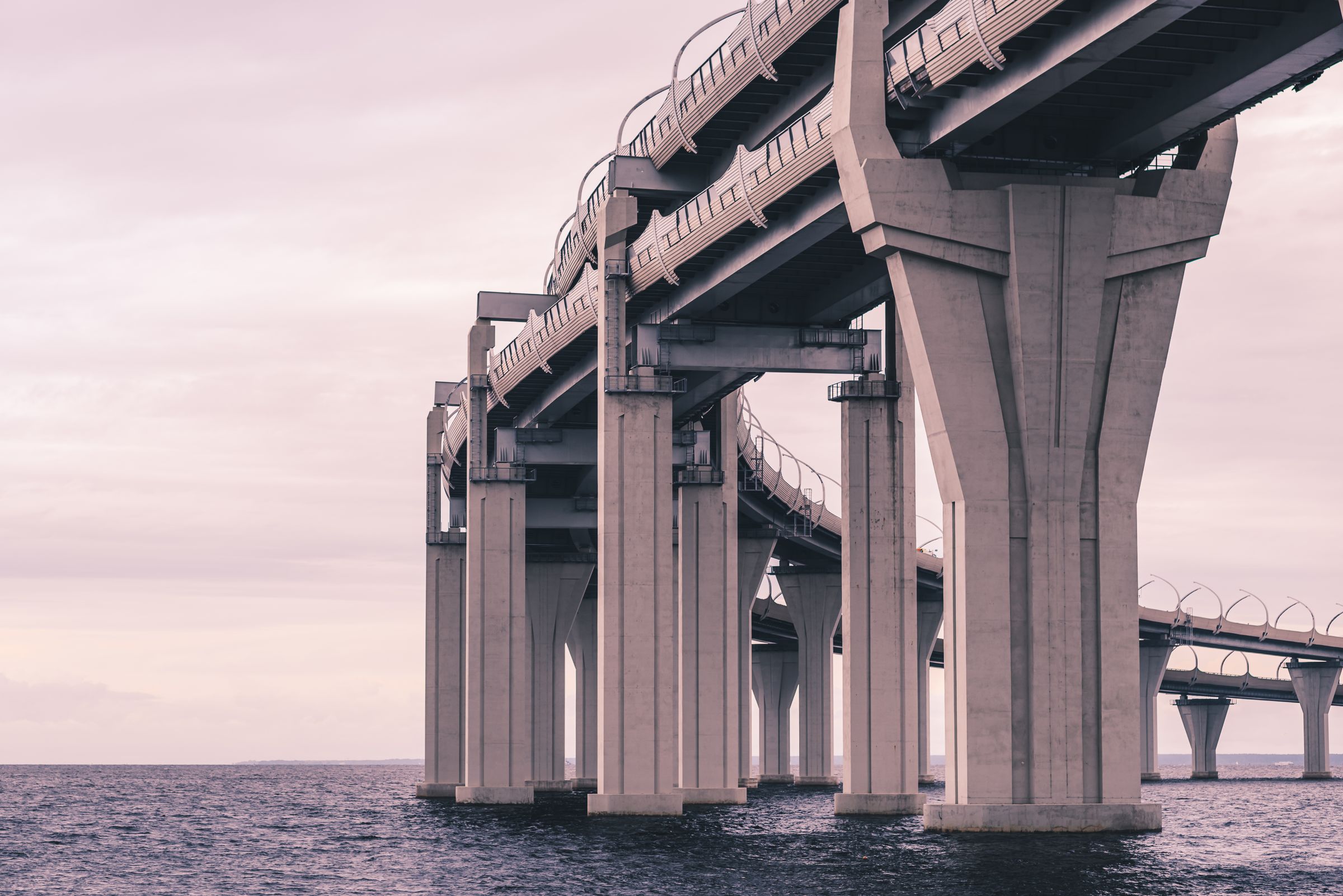
Bridge Foundations and Substructures
- Spread, pile, drilled-shaft, caisson and well foundations
- Abutment, pier, pile-cap and foundation interface design
- Scour, hydraulic and seismic demands using approved specialist inputs
- Lateral, longitudinal, braking, centrifugal and bearing-reaction load transfer
- Soil-structure interaction and foundation flexibility in global bridge models
- Existing-foundation assessment, strengthening and load-rating support
Bridge foundation work may reference applicable IRC foundation and substructure provisions, AASHTO LRFD Bridge Design Specifications, EN 1997 and owner criteria together with the governing structural-material standard.
Machine and Dynamic Foundations
- Block, table-top and framed machine foundations
- Foundations for rotating, reciprocating and impact equipment
- Static and dynamic stiffness representation
- Natural-frequency separation and resonance checks
- Amplitude, velocity and acceleration response
- Unbalanced-force, transient and operating-condition analysis
- Soil damping, radiation damping and impedance inputs supplied by the geotechnical basis
- Anchor, pedestal, grout and equipment-interface design
Relevant frameworks may include the applicable IS 2974 series, ACI 351 guidance, equipment-vendor criteria and project vibration limits.
Offshore Jacket and Pile Foundations
Potential services include:
- Jacket pile axial and lateral response
- Pile-soil interaction in global in-place models
- p-y, t-z and q-z curve implementation from approved geotechnical data
- Pile-group interaction and foundation stiffness matrices
- Pile-head, leg, sleeve, grouted or welded connection-load transfer
- Foundation demand under storm, operating, seismic, fatigue and accidental cases
- Pile structural strength, local buckling and fatigue checks
- Foundation reassessment for scour, degradation, modification or life extension
- Structural input to penetration, drivability and installation studies
Drivability, axial capacity, lateral soil response, cyclic degradation and geohazard definition require a project geotechnical basis. STRUCTOLYX® integrates those parameters into the structural model and verifies the structural foundation components.
Mudmat and Subsea Foundation Analysis
Mudmats support subsea structures during installation and operation and may be governed by low-strength surficial soil, eccentric loading, cyclic action, suction, retrieval or local plate response.
Potential mudmat services include:
- Unskirted and skirted mudmat concept and sizing support
- Vertical bearing, sliding, overturning and uplift assessment
- Combined vertical-horizontal-moment demand
- Contact-pressure and load-eccentricity distribution
- Settlement, tilt and differential movement assessment
- Skirt penetration, passive resistance and suction-related checks using geotechnical inputs
- Cyclic and installation-condition assessment
- Structural plate, stiffener, beam, weld and frame design
- Local shell finite-element analysis of concentrated load introduction
- Support, grout, shim and subsea-equipment interface checks
- On-bottom stability, installation, set-down and retrieval design situations
The geotechnical basis may follow ISO 19901-4, API RP 2GEO, DNV-RP-C212 and project-specific soil investigation and laboratory data. Structural design may additionally reference DNV, API, ISO, AISC or project material standards.
Other Offshore Foundation Systems
- Gravity-base and seabed-supported foundations
- Monopiles and large-diameter tubular foundations
- Suction caissons, suction buckets and suction anchors
- Skirted foundations and embedded plates
- Subsea equipment, manifold, protection and support foundations
- Foundation interfaces for risers, conductors and pipelines
These systems require project-specific geotechnical, installation and hydrodynamic inputs. Services are accepted according to available competence, data and the governing design standard.
Foundation Analysis Methods
- Rigid-foundation hand and code calculations
- Beam-on-elastic-foundation and spring-supported models
- Nonlinear p-y, t-z and q-z soil-response models
- Plate, shell and solid structural finite-element models
- Contact and compression-only soil-support representation
- Integrated superstructure-foundation models
- Substructuring and foundation-stiffness matrices
- Static, cyclic, dynamic and seismic soil-structure interaction
- Parametric and sensitivity studies for uncertain ground stiffness or resistance
Applicable Standards and Design Bases
Project bases may draw on IS 1904, IS 6403, the IS 2911 series, IS 2950, the IS 2974 series, IS 456, applicable IS 1893 provisions and IRC 78 for bridge foundations, or EN 1997 with the relevant national annex, ACI 318, ACI 336 and ACI 351 guidance, ASCE loading criteria, AASHTO LRFD bridge provisions, ISO 19901-4, API RP 2GEO, DNV-RP-C212 and client or class requirements.
The project register identifies the governing edition, reliability format, ground model, partial or safety factors, structural-material code, execution requirements and monitoring assumptions. Standards are not combined without a documented interface basis.
Required Inputs
- Geotechnical interpretive report and design soil parameters
- Borehole, laboratory, in-situ test and groundwater information
- Characteristic and design resistance values or soil-response curves
- Superstructure actions, combinations and interface reactions
- Foundation geometry, levels, construction sequence and tolerances
- Scour, cyclic, seismic, liquefaction, frost or expansive-soil inputs where relevant
- Installation, access, neighbouring-foundation and utility constraints
- Serviceability limits for settlement, rotation and vibration
Deliverables
- Foundation design-basis memorandum
- Structural-geotechnical interface and responsibility matrix
- Foundation option and sizing study
- Bearing, settlement, stability and pile-response calculations
- Soil-structure interaction model and stiffness outputs
- Reinforced-concrete, steel or composite foundation design checks
- Foundation drawings, schedules and technical specifications where appointed
- Assumption, sensitivity and monitoring requirements
- Foundation analysis and design report